
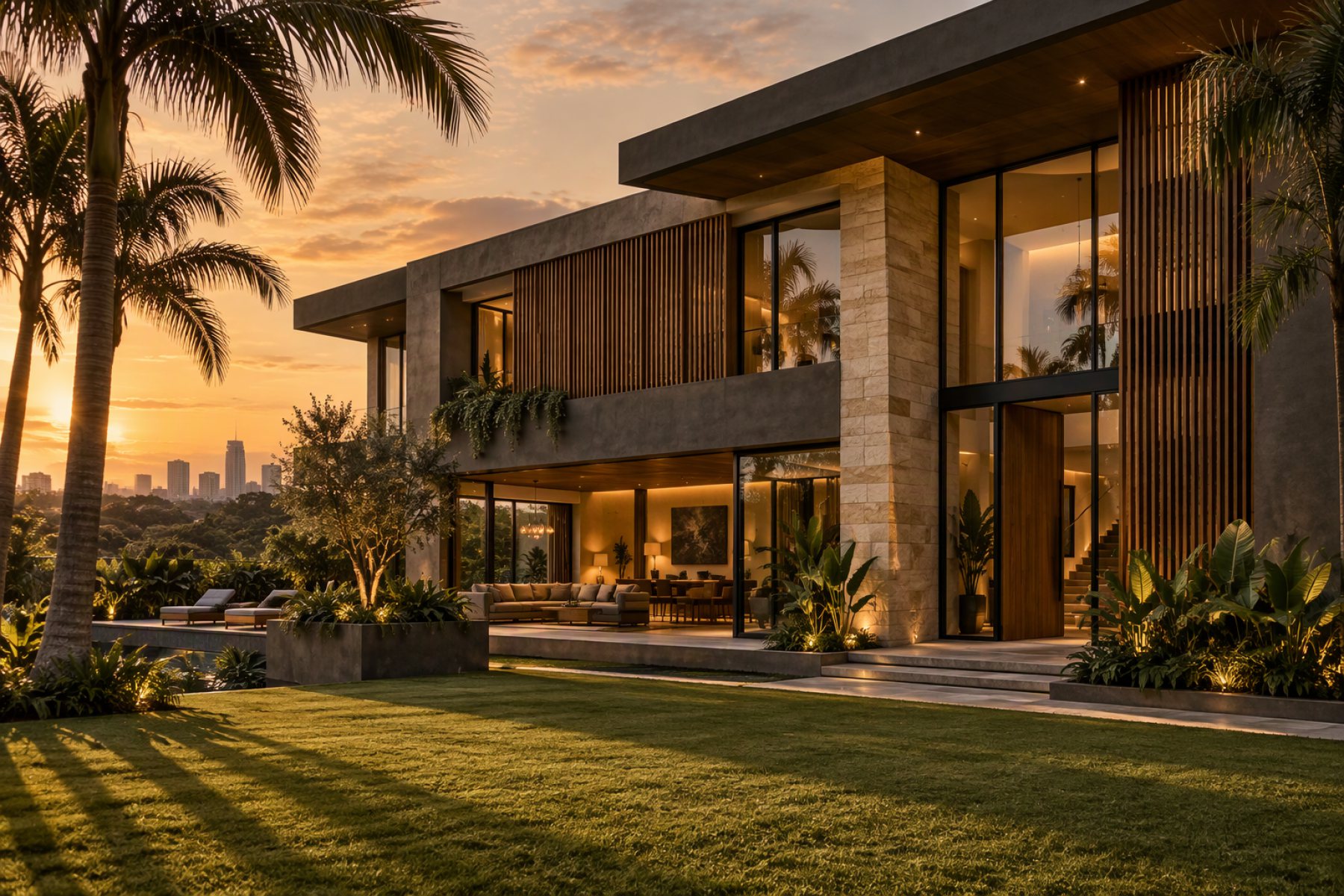
Nairobi sits at 1,600 metres, which means mild days, cool nights and a sun that is stronger than the air temperature suggests. Designs imported from hotter or colder climates tend to fail here in subtle ways: rooms that overheat at 2pm, glazing that loses heat at 2am, and lighting that fights the seasons.
Build for the sun path, not the view alone
West-facing glass is beautiful and unforgiving. Where a view demands it, we shade it: deep overhangs, external screens, or deciduous planting that filters the low afternoon sun. East and south light is gentler and worth protecting with larger openings.
Cross ventilation beats air conditioning
A well-planned house can move air through in the late afternoon and flush the day’s heat in twenty minutes. That requires openings on two sides of each room, and doors that can be left open without compromising privacy or security. Mechanical cooling should be a backup, not a plan.
Cool surfaces, warm materials
Stone and tile floors stay comfortable underfoot in the afternoon; timber and textiles take the edge off cool evenings. We use both deliberately, room by room, rather than applying one finish everywhere.
Light for the 5pm thunderstorm
Nairobi’s afternoon sky can turn in minutes. Layered lighting — ambient, task and accent — with generous switching means a room can feel right in bright morning and grey afternoon without being over-lit at either. Dimming on the main circuits costs little at build stage and changes how a home feels every day.
None of these decisions costs more than ignoring them. They simply have to be made early, while the walls are still lines on a page.