There is a particular kind of interior that photographs beautifully and exhausts you to live in: six stone varieties, four timber tones, three metals and a colour scheme that needs explaining. It is not a failure of taste so much as a failure of editing.
Constraint is a design tool
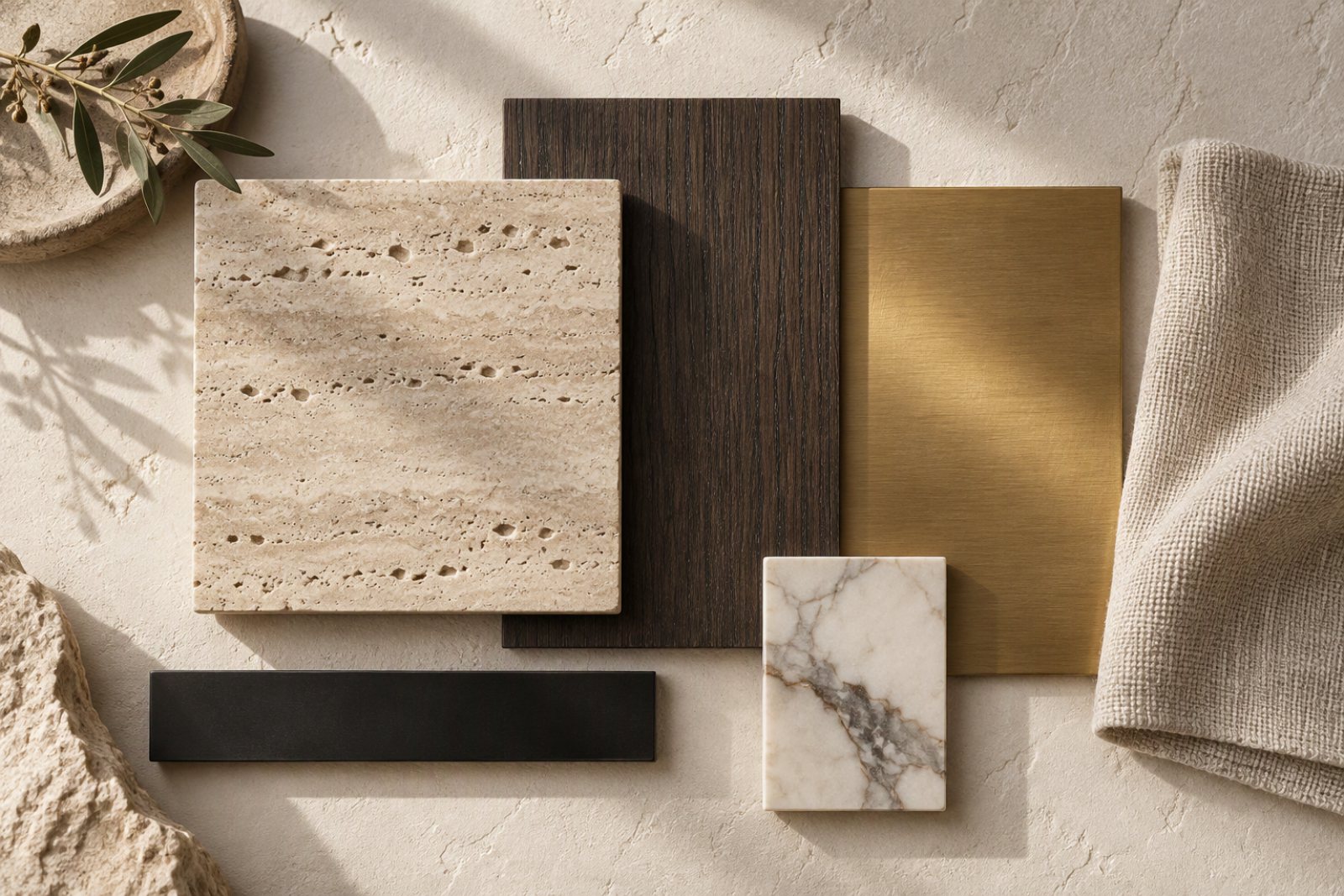
When a palette is limited, every surface has to earn its place. Junctions become simpler, the eye rests, and the things you do choose — a brass tap, a grain of travertine — are allowed to be seen. Restraint is not austerity; it is emphasis.
Materials that age honestly
We look for surfaces that improve with use. Unlacquered brass dulls into a warm bronze. Solid oak takes on the light. Honed stone develops a patina rather than a scratch pattern. These materials forgive daily life because they record it.
Fewer materials, better maintained
A short palette is also a maintenance decision. Every additional finish brings its own cleaner, its own failure mode and its own replacement risk. Three materials you understand are easier to live with for a decade than twelve you do not.
How we choose
We start with the climate, then the room’s use, then the light. A material that works in a shaded hallway may fail beside west glazing. Only after those tests do we consider appearance — and by then the shortlist is usually obvious.
The result is not a look. It is a set of decisions that still make sense when the trend that inspired them has moved on.